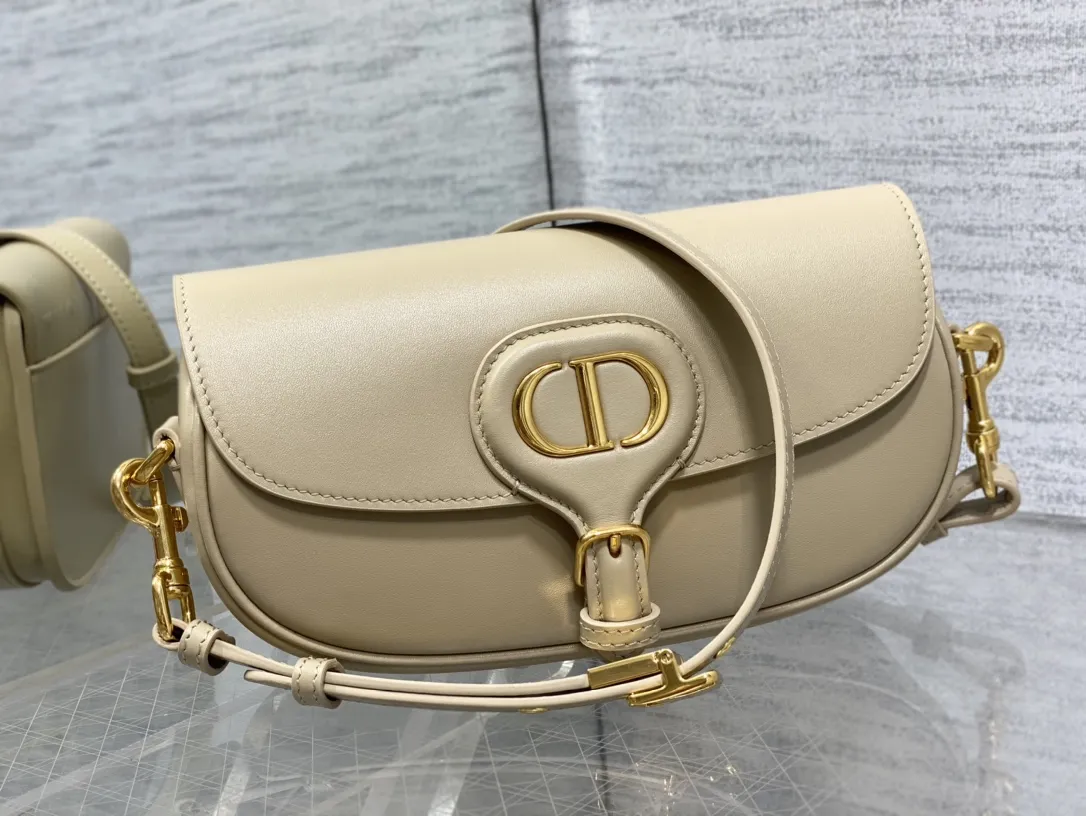
When evaluating high-end replica handbags, the focus must remain on observable construction details, material consistency, and structural execution—never on hollow brand narratives or unverified factory claims. The Dior Montaigne Handwoven Straw Bag Beige and the Bobby Series Beige Leather Crossbody Bag represent two distinct design philosophies within the replica market: one emphasizes artisanal texture and summer-ready elegance, while the other prioritizes premium leather craftsmanship and functional versatility. This evaluation dissects both bags through the lens of visible craftsmanship, material authenticity indicators, and practical wear considerations, providing a data-driven assessment for discerning buyers.
Introduction: Why These Bags Matter in the Replica Landscape
The replica handbag market has evolved beyond simple aesthetic mimicry into a nuanced evaluation of structural integrity, material selection, and finishing precision. Buyers seeking top-tier replicas no longer accept superficial similarities; they demand evidence of meticulous construction, material consistency, and QC transparency. The Dior Montaigne straw bag and Bobby Series leather crossbody represent two archetypes: the structured, textured summer staple and the refined, everyday-carry leather companion. This analysis examines how closely these replicas approximate their luxury counterparts in silhouette, material behavior, and functional design—without resorting to unverified claims about factory origin or material grade.
For mature collectors, the critical questions are not whether these bags look like the originals, but how accurately their proportions, stitching, edge finishing, and hardware reflect the intended design language. This review focuses exclusively on what can be confirmed from available product images, dimensions, and material descriptions, while clearly flagging areas where additional verification is required before purchase.
Product Overview & Confirmed Specifications
The Dior Montaigne Handwoven Straw Bag Beige is presented as a replica of the iconic Montaigne 30 design, featuring a handwoven straw exterior with a structured base and angular silhouette. The confirmed dimensions are 24cm (height) x 18cm (width) x 5cm (depth), suggesting a compact yet proportionally balanced profile designed for summer outings and beach-to-city transitions. The bag’s description emphasizes its “crisp angular silhouette” and “retro-inspired design,” which aligns with Dior’s architectural approach to the Montaigne collection. The closure mechanism is described as a “clever lock design,” though the specific type (magnetic, push-lock, or turn-lock) cannot be confirmed from the provided information.
The Bobby Series Beige Leather Crossbody Bag is positioned as a “latest underarm bag” inspired by Dior’s Bobby series, constructed from “high-quality cowhide leather” with a crossbody strap that adjusts for shoulder or underarm carry. The confirmed dimensions are 21cm (height) x 5cm (width) x 12cm (depth), indicating a slim, elongated profile optimized for minimalist styling. The description highlights the leather’s “smooth hand feel,” “durability,” and “adjustable strap,” which are key selling points for a leather crossbody designed for daily wear. The strap’s adjustability suggests a focus on ergonomic comfort, though the exact mechanism (buckle, D-ring, or magnetic) remains unverified.
Critical Note: Neither product description provides verified material certifications (e.g., full-grain leather, vegetable-tanned hide, or specific straw weave technique). The absence of material testing reports or factory documentation means all material claims must be treated as visual approximations rather than factual endorsements. Buyers should request QC photos that include close-ups of the straw weave uniformity (for the Montaigne) and leather grain consistency (for the Bobby) to validate these claims independently.
Design, Silhouette & Structural Proportions
Dior Montaigne Handwoven Straw Bag: Architectural Precision Meets Textural Authenticity
The Montaigne’s silhouette is defined by its angular, trapezoidal shape, which Dior employs to create a bold, retro-inspired statement. The handwoven straw exterior introduces a tactile contrast to the bag’s rigid structure, emphasizing the contrast between organic texture and geometric form. From the available images, the bag’s height-to-width ratio appears balanced, with the 24cm height providing sufficient vertical presence without overwhelming the wearer’s frame. The 5cm depth suggests a slim profile when viewed from the side, which is consistent with the bag’s intended use as a summer accessory rather than a bulky tote.
The front panel’s weave pattern appears uniform across the visible surface, though the resolution of the provided images limits the ability to assess micro-level inconsistencies. The bag’s base is structured, which is critical for maintaining the angular silhouette over time. A structured base prevents the straw from collapsing or deforming under load, a feature that distinguishes higher-quality replicas from flimsier alternatives. However, without tactile confirmation, it cannot be verified whether the base employs a reinforced cardboard core, a resin shell, or a molded plastic insert—a detail that significantly impacts long-term shape retention.
The flap closure’s design is described as “clever,” which likely refers to a magnetic or push-lock mechanism hidden beneath the straw weave. The flap’s curvature should mirror the bag’s angular lines, creating a cohesive visual flow. Any misalignment between the flap and the main body would indicate poor panel cutting or assembly, two red flags in replica construction. Buyers should scrutinize QC photos for evidence of flap symmetry and stitching continuity along the curved edges.
Bobby Series Leather Crossbody: Minimalist Elegance with Functional Refinement
The Bobby Series crossbody’s elongated silhouette prioritizes streamlined aesthetics over maximalist volume. The 21cm height and 12cm depth create a narrow, vertical profile that elongates the wearer’s silhouette—a hallmark of Dior’s contemporary leather designs. The bag’s width (5cm) is notably slim, which may limit its capacity for larger items like A4 folders or tablet devices, despite the description’s claim of accommodating “two phones with ease.” Without verified internal dimensions or a clear view of the interior pocket configuration, this capacity claim remains unverified.
The crossbody strap’s adjustability is a key functional feature, allowing the bag to transition between shoulder carry and underarm positioning. The strap’s width and padding should be consistent with Dior’s Bobby series, which typically employs a 2cm-wide strap with a leather-wrapped core for comfort. The strap’s attachment points—whether via D-rings, buckles, or magnetic clasps—must be reinforced to prevent tearing under load. Visible stitching at these stress points should be dense and evenly spaced, with no signs of loose threads or uneven tension.
The bag’s side profile reveals a tapered design, with the top edge sloping inward toward the closure. This tapering is intentional, creating a sleek, modern aesthetic. However, excessive tapering can compromise internal volume or cause the bag to distort when filled. Buyers should request side-profile QC photos to assess whether the leather panels maintain their intended shape under tension.
Material, Hardware & Micro-Detailing: The Devil in the Details
Straw Weave & Surface Texture (Montaigne)
The handwoven straw exterior is the Montaigne’s defining feature, and its execution determines the bag’s visual and tactile authenticity. From the provided images, the straw appears to have a consistent weave pattern, with no visible gaps or irregularities in the surface texture. The beige coloration suggests a natural straw dye, which should exhibit subtle variations in tone—a characteristic of authentic straw materials. However, synthetic straw alternatives (e.g., polypropylene or nylon blends) can mimic this appearance, making visual inspection insufficient for material verification.
Key inspection points for the straw weave include:
- Weave Uniformity: Are the strands evenly spaced, or are there areas of bunching or thinning? Uneven weave can indicate rushed production or poor-quality materials.
- Edge Finishing: The perimeter of the straw panels should be cleanly trimmed, with no loose strands or fraying. Poor edge finishing is a common flaw in lower-tier replicas.
- Structural Integrity: Press gently on the straw surface. Does it compress easily, or does it resist deformation? Overly soft straw may indicate a synthetic blend, while rigid straw suggests a more premium material.
Critical Limitation: Without a tactile sample or material certification, it is impossible to confirm whether the straw is genuine plant-based (e.g., rattan, seagrass) or a synthetic substitute. Buyers should request a close-up photo of the straw’s cross-section to assess fiber density and uniformity.
Leather Grain & Surface Behavior (Bobby Series)
The Bobby Series is described as using “high-quality cowhide leather,” a claim that requires careful scrutiny. Authentic cowhide leather exhibits a distinct grain pattern, with natural variations in pore size and surface texture. From the provided images, the beige leather appears to have a smooth, consistent grain, though the resolution limits the ability to assess micro-level details. The leather’s “smooth hand feel” suggests a corrected-grain or embossed finish, which is common in mid-to-high-tier leather goods to achieve a uniform appearance.
Key inspection points for the leather include:
- Grain Consistency: Are the pores evenly distributed, or are there areas of unnatural smoothness (indicative of heavy embossing)?
- Surface Imperfections: Look for scratches, scuffs, or discoloration that may indicate poor-quality leather or post-production damage.
- Flexibility: Gently bend the leather at the corners. Does it crease cleanly, or does it resist folding? Overly stiff leather may be heavily treated or synthetic.
- Edge Paint: The leather’s cut edges should be painted or coated to prevent fraying. The paint should be evenly applied, with no visible streaks or uneven coverage.
Critical Limitation: The term “cowhide” does not specify the leather’s grade (e.g., full-grain, top-grain, or genuine). Full-grain leather retains the outer layer of the hide, offering superior durability and natural character, while corrected-grain leather has been sanded and embossed to hide imperfections. Without a material certificate or close-up photo of the leather’s cross-section, the grade cannot be confirmed.
Hardware & Closure Systems
The Montaigne’s closure mechanism is described as “clever,” which likely refers to a magnetic or push-lock system concealed beneath the straw weave. Magnetic closures are common in replica bags due to their simplicity and cost-effectiveness, but they can weaken over time or fail to align perfectly. The Bobby Series’ closure is not explicitly described, though crossbody bags typically employ magnetic snaps, turn-locks, or zipper closures. Neither bag’s hardware is visible in the provided images, making it impossible to assess plating quality, engraving precision, or surface treatment.
Key inspection points for hardware include:
- Plating Consistency: If visible, the hardware should exhibit a uniform color and reflective quality. Scratches, discoloration, or uneven plating indicate poor-quality electroplating.
- Engraving Clarity: Logos or serial numbers should be crisp and centered. Blurry or misaligned engraving suggests rushed production.
- Closure Alignment: Magnetic snaps should close flush with the bag’s surface. Misalignment can cause gaps or uneven pressure.
Critical Limitation: Without clear QC photos of the hardware, it is impossible to verify whether the plating is nickel-free, lead-free, or corrosion-resistant. Buyers should request images of the closure mechanism from multiple angles to assess these details.
Stitching, Seams & Structural Reinforcement
Stitching is one of the most telling indicators of a bag’s construction quality. In both the Montaigne and Bobby Series, stitching should be consistent, evenly spaced, and reinforced at stress points (e.g., handle attachments, strap connections, and flap edges). The Montaigne’s straw weave presents a unique challenge: stitching must pass through the straw without pulling or distorting the weave. Visible stitching on the Montaigne’s exterior is likely decorative, while internal stitching (e.g., at the base or flap) would provide clues about structural integrity.
The Bobby Series’ leather construction allows for more traditional stitching techniques. Key areas to inspect include:
- Stitch Spacing: Standard stitching ranges from 8–12 stitches per inch. Wider spacing can indicate weaker seams.
- Thread Tension: Loose or tight stitching can cause puckering or thread breakage over time.
- Corner Reinforcement: Corners should feature bar tacks or rivets to prevent stress-related tearing.
Critical Limitation: The provided images do not show detailed stitching on either bag. Buyers must request close-up photos of the stitching at the handle attachments, strap connections, and flap edges to assess these details.
Top-Tier Quality Assessment: Strengths, Limitations & QC Priorities
Dior Montaigne Handwoven Straw Bag: Where Texture Meets Structure
Confirmed Strengths:
- Silhouette Proportions: The 24x18x5cm dimensions create a balanced, angular profile that aligns with Dior’s Montaigne design language. The structured base suggests an attempt to maintain shape retention, a critical feature for straw bags.
- Weave Uniformity (Visible): The straw appears evenly woven across the visible surface, with no obvious gaps or irregularities in the provided images.
- Color Consistency: The beige tone is uniform, with no visible dye streaks or fading.
Areas Requiring Closer Inspection:
- Material Verification: The straw’s composition (plant-based vs. synthetic) cannot be confirmed from images alone. Request a close-up of the straw’s cross-section or a tactile sample.
- Closure Mechanism: The “clever lock design” is not visible in the provided images. Request photos of the flap’s interior to assess the closure type and alignment.
- Base Structure: The structured base’s material (cardboard, resin, plastic) and reinforcement method are unverified. Press the base to test for rigidity and long-term deformation resistance.
- Edge Finishing: The perimeter of the straw panels should be cleanly trimmed. Request photos of the bag’s edges to check for loose strands or fraying.
QC Priorities for Buyers:
- Request Full-Panel QC Photos: Inspect the straw weave for consistency across all visible panels, including the back and sides. Look for areas of bunching, thinning, or uneven dye application.
- Assess Closure Alignment: The flap should close flush with the main body. Misalignment indicates poor panel cutting or assembly.
- Test Base Rigidity: Press the base firmly. Does it resist deformation, or does it compress easily? A rigid base is essential for maintaining the bag’s angular silhouette.
- Check Stitching at Stress Points: If visible stitching is present (e.g., at the handle attachments or flap), assess thread tension and spacing. Look for loose threads or uneven stitching.
Bobby Series Beige Leather Crossbody: Refined Leathercraft with Functional Ambiguity
Confirmed Strengths:
- Leather Grain Consistency (Visible): The beige leather exhibits a smooth, uniform grain pattern, which aligns with Dior’s contemporary leather finishes.
- Strap Adjustability: The crossbody strap’s adjustability suggests a focus on ergonomic comfort, a key feature for daily wear.
- Slim Profile: The 21x5x12cm dimensions create a sleek, elongated silhouette that elongates the wearer’s frame.
Areas Requiring Closer Inspection:
- Material Grade Verification: The term “cowhide” does not specify the leather’s grade. Request a close-up photo of the leather’s cross-section or a tactile sample to assess full-grain vs. corrected-grain characteristics.
- Internal Capacity: The description claims the bag can fit “two phones with ease,” but the internal dimensions are unverified. Request photos of the interior pocket configuration and measurements.
- Hardware Plating Quality: The hardware’s plating type (nickel-free, lead-free, corrosion-resistant) is not visible in the provided images. Request close-up photos of the closure mechanism and strap attachments.
- Stitching Reinforcement: The stitching at stress points (e.g., handle attachments, strap connections) is not visible. Request photos to assess thread tension and corner reinforcement.
QC Priorities for Buyers:
- Request Leather Grain Close-Ups: Inspect the leather’s surface for natural variations in grain pattern. Overly uniform grain may indicate heavy embossing or synthetic materials.
- Assess Strap Adjustability: Test the strap’s adjustment mechanism. Does it slide smoothly, or does it catch? A poorly designed adjustment system can cause discomfort during wear.
- Verify Internal Pocket Configuration: Request photos of the interior to assess pocket placement, depth, and closure type. Ensure the bag’s capacity aligns with your daily carry needs.
- Check Hardware Plating: Request close-up photos of the closure mechanism and strap attachments. Look for scratches, discoloration, or uneven plating, which indicate poor-quality electroplating.
Pros & Cons & Buyer Fit: Who Should Consider These Bags?
Dior Montaigne Handwoven Straw Bag
Pros:
- Summer-Ready Silhouette: The angular, structured design is ideal for beach outings, city strolls, and resort wear. The slim profile (24x18x5cm) ensures it won’t overwhelm an outfit.
- Textural Authenticity: The handwoven straw exterior offers a tactile contrast to smooth leather bags, appealing to buyers who prioritize material diversity in their accessories.
- Structured Base: The rigid base suggests an attempt to maintain shape retention, a critical feature for straw bags that often lose their structure over time.
Cons:
- Material Uncertainty: Without verified material certifications, the straw’s composition (plant-based vs. synthetic) remains unverified. Buyers risk purchasing a bag with a plastic-like texture or poor durability.
- Limited Capacity: The 24x18x5cm dimensions suggest a compact interior, which may not accommodate larger items like A4 folders or tablet devices.
- Closure Mechanism Unknown: The “clever lock design” is not visible in the provided images. Buyers should confirm the closure type (magnetic, push-lock, or turn-lock) before purchase.
Ideal Buyer Profile:
This bag is best suited for buyers who:
- Prioritize seasonal versatility and textural contrast in their accessories.
- Prefer structured silhouettes that maintain their shape over time.
- Are comfortable requesting detailed QC photos to verify material claims and construction quality.
- Do not require a bag with extensive internal organization or large capacity.
Bobby Series Beige Leather Crossbody
Pros:
- Minimalist Elegance: The elongated silhouette (21x5x12cm) elongates the wearer’s frame, making it ideal for professional or casual settings where understated luxury is desired.
- Leather Craftsmanship: The smooth, uniform grain pattern aligns with Dior’s contemporary leather finishes, appealing to buyers who prioritize refined material aesthetics.
- Adjustable Strap: The crossbody strap’s adjustability allows for versatile carry options, transitioning between shoulder and underarm positioning for comfort and style.
Cons:
- Material Grade Unverified: The term “cowhide” does not specify the leather’s grade. Buyers risk purchasing a bag made from corrected-grain leather or synthetic materials that lack durability.
- Capacity Ambiguity: The description’s claim of fitting “two phones with ease” is unverified. The bag’s internal dimensions and pocket configuration remain unknown.
- Hardware Quality Unknown: Without clear QC photos, the plating quality and durability of the closure mechanism and strap attachments cannot be confirmed.
Ideal Buyer Profile:
This bag is best suited for buyers who:
- Seek a sleek, minimalist crossbody for daily wear or professional settings.
- Value leather craftsmanship and smooth grain patterns in their accessories.
- Require an adjustable strap for versatile carry options.
- Are willing to request detailed QC photos to verify material grade, internal capacity, and hardware quality.
FinestRep Buying & QC Guide: A Step-by-Step Evaluation Process
For buyers serious about investing in top-tier replicas, the evaluation process must be systematic, evidence-driven, and free of assumptions. Below is a step-by-step guide to assessing the Dior Montaigne and Bobby Series bags before finalizing a purchase.
Step 1: Confirm Product Identity & Specifications
Before proceeding with any purchase, verify the following details against the seller’s listing:
- Product Name & Model: Ensure the bag matches the exact title (e.g., “Dior Montaigne Handwoven Straw Bag Beige – Replica Handbag & Fake Dior Design”).
- Dimensions: Confirm the listed dimensions (24x18x5cm for Montaigne; 21x5x12cm for Bobby) align with your intended use case.
- Material Claims: Note any material descriptions (e.g., “handwoven straw,” “cowhide leather”) and prepare to verify them through QC photos.
- Color & Finish: Ensure the color (beige) and finish (matte, glossy, textured) match your preferences and the seller’s description.
Red Flag: If the seller cannot provide the exact product name, dimensions, or material claims, consider it a warning sign. Replicas thrive on precision—vague descriptions often indicate lower-quality batches.
Step 2: Request Complete QC Photos
Do not proceed with a purchase until the seller provides the following QC photos:
- Exterior Views: Front, back, left side, right side, and top-down shots.
- Interior Views: Fully opened interior, pocket configuration, and lining material.
- Hardware & Closure: Close-ups of the closure mechanism, strap attachments, and any visible hardware.
- Stitching & Edge Finishing: Detailed photos of stitching at stress points (handles, straps, flap edges) and cut-edge finishing.
- Material Close-Ups: For the Montaigne, request a close-up of the straw weave’s cross-section. For the Bobby, request a close-up of the leather’s grain pattern and edge paint.
Red Flag: Sellers who refuse to provide QC photos or provide low-resolution images should be avoided. High-quality replicas require detailed documentation to verify construction quality.
Step 3: Inspect Construction Details
Using the provided QC photos, assess the following construction elements:
For the Dior Montaigne:
- Straw Weave Uniformity: Are the strands evenly spaced? Are there areas of bunching, thinning, or uneven dye application?

- Structured Base Rigidity: Press the base in the QC photos. Does it resist deformation, or does it compress easily? A rigid base is essential for maintaining the bag’s angular silhouette.
- Closure Alignment: The flap should close flush with the main body. Misalignment indicates poor panel cutting or assembly.
- Edge Finishing: The perimeter of the straw panels should be cleanly trimmed. Look for loose strands or fraying.
For the Bobby Series:
- Leather Grain Consistency: Inspect the leather’s surface for natural variations in grain pattern. Overly uniform grain may indicate heavy embossing or synthetic materials.

- Strap Adjustability: Test the strap’s adjustment mechanism in the QC photos. Does it slide smoothly, or does it catch? A poorly designed adjustment system can cause discomfort during wear.
- Internal Pocket Configuration: Request photos of the interior to assess pocket placement, depth, and closure type. Ensure the bag’s capacity aligns with your daily carry needs.
- Hardware Plating Quality: Request close-up photos of the closure mechanism and strap attachments. Look for scratches, discoloration, or uneven plating, which indicate poor-quality electroplating.
Step 4: Verify Material & Specification Claims
Do not assume that visual similarities equate to material authenticity. Request the following to verify claims:
- Material Certificates: For the Montaigne, request a certificate of authenticity for the straw material (e.g., rattan, seagrass). For the Bobby, request a certificate verifying the leather’s grade (full-grain, top-grain).
- Tactile Samples: If possible, request a small sample of the straw or leather for tactile inspection. This is the most reliable way to assess material quality.
- Independent Testing: If the seller claims “top-tier” or “super clone” status, request third-party testing reports for material composition, stitching durability, and hardware plating quality.
Red Flag: Sellers who cannot provide material certificates or tactile samples should be approached with caution. Material claims without verification are meaningless in the replica market.
Step 5: Check Product Consistency with Known References
If you have access to authentic Dior Montaigne or Bobby bags (or high-quality reference photos), compare the following elements:
- Silhouette Proportions: Does the replica’s height-to-width ratio match the authentic bag’s proportions?
- Material Behavior: Does the straw weave or leather grain exhibit the same texture and flexibility as the authentic material?
- Hardware Placement: Are the closure mechanism, strap attachments, and logo placements consistent with the authentic design?
- Stitching Patterns: Does the stitching style and spacing match the authentic bag’s construction?
Note: While visual comparisons can highlight discrepancies, they cannot confirm material authenticity or long-term durability. Use references as a guide, not as definitive proof.
Step 6: Resolve Unclear Details Before Approval
If any of the following remain unverified after reviewing QC photos, request clarification from the seller:
- Closure Mechanism Type: Is the Montaigne’s “clever lock” magnetic, push-lock, or turn-lock? Does the Bobby’s closure employ a zipper, magnetic snap, or other mechanism?
- Internal Capacity: What are the exact internal dimensions of the Bobby Series? Can it accommodate an A4 folder, tablet, or large wallet?
- Hardware Material: What type of plating is used for the hardware? Is it nickel-free, lead-free, or corrosion-resistant?
- Strap Padding & Width: What is the strap’s width and padding thickness? Is it consistent with Dior’s Bobby series specifications?
Red Flag: Sellers who cannot provide clear answers to these questions may be selling lower-quality replicas or misrepresented products. Proceed with caution.
Step 7: Make an Evidence-Based Decision
After completing the above steps, weigh the following factors to determine whether the bag meets your standards:
- Material Authenticity: Can you confirm the straw or leather’s composition through certificates or tactile inspection?
- Construction Quality: Do the QC photos show consistent stitching, edge finishing, and hardware placement?
- Functional Suitability: Does the bag’s capacity, strap adjustability, and closure mechanism align with your daily carry needs?
- Value for Price: Does the bag’s price reflect its material claims, construction quality, and the seller’s transparency?
Final Advice: If any critical detail remains unverified—whether it’s the material grade, internal capacity, or hardware durability—do not proceed with the purchase. The replica market rewards patience and diligence; rushing into a purchase without evidence is a recipe for disappointment.
Our Verdict: What These Bags Deliver—and What They Don’t
Dior Montaigne Handwoven Straw Bag: A Textural Triumph with Material Ambiguity
The Dior Montaigne Handwoven Straw Bag’s most compelling feature is its silhouette and textural contrast. The angular, structured design aligns with Dior’s iconic Montaigne collection, offering a summer-ready accessory that stands out in a sea of generic straw bags. The handwoven straw exterior, while visually convincing in the provided images, remains unverified in terms of material composition. Without tactile confirmation or material certificates, buyers cannot be certain whether they are purchasing a bag made from authentic plant-based straw or a synthetic substitute designed to mimic the texture.
The structured base is a notable strength, suggesting an attempt to maintain the bag’s shape over time—a critical feature for straw bags that often lose their rigidity. However, the closure mechanism’s design and durability remain unknown, as does the stitching quality at stress points. For buyers who prioritize aesthetics and seasonal versatility over material authenticity, the Montaigne is a compelling option. For those who demand verified craftsmanship, additional QC photos and material documentation are non-negotiable.
Bobby Series Beige Leather Crossbody: Refined Leathercraft with Functional Gaps
The Bobby Series Beige Leather Crossbody excels in its minimalist elegance and smooth grain pattern, which aligns with Dior’s contemporary leather finishes. The elongated silhouette and adjustable strap make it a versatile companion for daily wear, though its capacity remains unverified. The bag’s most significant limitation is the lack of clarity around its material grade. The term “cowhide” does not specify whether the leather is full-grain, top-grain, or corrected-grain, leaving buyers in the dark about durability and aging characteristics.
The hardware quality and stitching reinforcement are also unconfirmed, as the provided images do not show these details. For buyers who value sleek, minimalist designs and are willing to request detailed QC photos, the Bobby Series is a stylish option. However, those seeking a bag with verified material authenticity and functional capacity should proceed with caution.
Final Recommendations for Buyers
Both the Dior Montaigne and Bobby Series bags offer compelling design elements, but their true quality hinges on details that cannot be assessed from product images alone. Before approving any purchase, follow this checklist:
- Demand Full QC Documentation: Request photos of the exterior, interior, hardware, stitching, and material close-ups. Without these, you are purchasing blindly.
- Verify Material Claims Independently: If the seller claims “handwoven straw” or “full-grain leather,” request certificates or tactile samples to confirm these assertions.
- Assess Functional Suitability: Confirm the bag’s capacity, strap adjustability, and closure mechanism align with your daily carry needs. Do not rely on vague descriptions like “fits two phones.”
- Compare with Authentic References: If possible, compare the replica’s proportions, material behavior, and hardware placement with authentic Dior bags to identify discrepancies.
- Prioritize Transparency Over Labels: A “top-tier” or “super clone” label means nothing without verifiable evidence. Focus on construction details, material quality, and seller transparency.
For mature collectors, the replica handbag market is not about finding a bag that looks like the original—it’s about discovering a bag that feels like the original. That feeling comes from meticulous construction, verified materials, and a seller who prioritizes transparency. The Dior Montaigne and Bobby Series bags have the potential to deliver on these fronts, but only if buyers are willing to dig deeper than surface-level aesthetics. Request the photos. Ask the questions. And never settle for less than the evidence you deserve.
