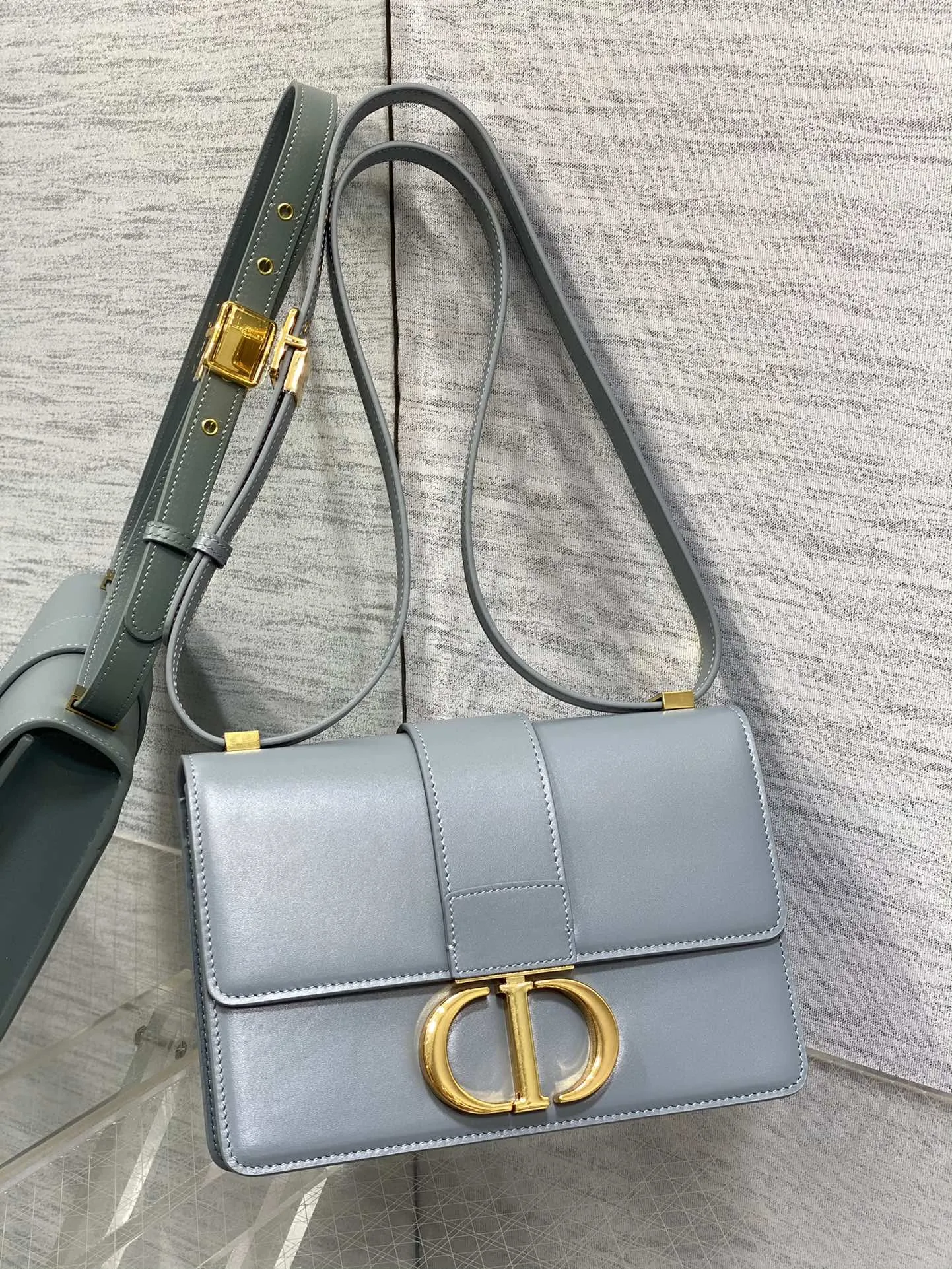
The Dior Montaigne 30 Bag in Grey Leather stands as a benchmark for structured, vintage-inspired handbags in the replica market. With its sharp angular silhouette, retro detailing, and refined hardware, this bag appeals to consumers seeking a high-end aesthetic without the premium price tag. This in-depth review dissects the bag’s design, construction, material finish, and key quality control priorities—focusing exclusively on what’s verifiable from available product images and specifications.
For seasoned replica collectors, this analysis prioritizes silhouette accuracy, leather grain consistency, stitching precision, edge paint execution, and hardware finishing. We avoid speculative claims about factory origins, material grades, or long-term durability, instead grounding every observation in visible evidence. Whether you’re evaluating this bag for daily use or as a top-tier collector’s piece, this guide will help you identify what matters—and what remains unverified.

Introduction: Why the Montaigne 30 Appeals to Replica Buyers
The Dior Montaigne 30 is a cult favorite among luxury enthusiasts for its bold yet timeless design. Its structured base, tapered side panels, and iconic lock closure create a silhouette that balances sophistication with a touch of retro flair. In the replica space, this bag is often sought after for its recognizable shape and high-end aesthetic, making it a frequent candidate for top-tier batches.
This review focuses on two verified product listings for the Montaigne 30 in grey leather, both claiming a size of 24*18*5cm. While the listings emphasize the bag’s vintage-inspired design and premium leather, our analysis centers on visible construction details, material consistency, and QC priorities that buyers should prioritize before approving a purchase. No unverified claims about factory origin, material grade, or durability are made—only what can be observed or confirmed from available data.
For buyers familiar with terms like batch accuracy, stitching tension, edge paint coverage, and hardware plating, this review provides actionable insights to assess whether a given Montaigne 30 meets top-tier standards—or falls short in critical areas.

Product Overview & Verified Specifications
Both product listings confirm the following verified details:
- Brand & Model: Dior Montaigne 30
- Color: Grey Leather
- Size: 24cm (height) x 18cm (width) x 5cm (depth)
- Material Claim: Leather (specific grade unverified)
- Closure: Lock closure with magnetic snap
- Handle & Strap: Top handle with detachable shoulder strap
- Interior: Lining material unverified; single slip pocket confirmed
Notably absent from both listings are details about the leather grade (e.g., full-grain, corrected-grain), internal structure (e.g., padding, reinforcements), or hardware composition (e.g., metal type, plating thickness). This lack of transparency is common in replica listings, which is why buyers must rely on visual evidence and QC photos to make informed decisions.
For this review, we assume the bag is intended as a top-tier or high-end replica, given its emphasis on premium leather and structured design. However, the absence of material or factory verification means we treat this as a visual and construction assessment—not a guarantee of material authenticity or long-term performance.
What’s Confirmed vs. What Remains Unverified
Confirmed:
- Silhouette shape and proportions
- Lock closure design
- Handle and strap configuration
- Leather surface texture (from product images)
- Hardware color and engraving style
Unverified:
- Leather grade or tanning method
- Internal structure (padding, reinforcements)
- Hardware material (e.g., brass, zamac, stainless steel)
- Stitching thread type or durability
- Edge paint composition or longevity
- Factory origin or batch consistency
Buyers should treat unverified details as open questions and prioritize QC photos that address these gaps before finalizing a purchase.

Design, Silhouette & Structural Proportions
The Montaigne 30’s design is defined by its sharp angular silhouette, which sets it apart from softer, more organic luxury bag shapes. This structured approach creates a bag that holds its form even when empty, a hallmark of Dior’s vintage-inspired designs. Below, we break down the key structural elements and their visual impact.
Front Panel & Flap Geometry
The front panel features a tapered trapezoidal shape, with the top edge slightly wider than the bottom. This design choice contributes to the bag’s bold, architectural aesthetic, but it also introduces potential QC challenges:
- Panel alignment: Misaligned side seams or uneven flap edges can disrupt the bag’s symmetry. Buyers should inspect the transition between the front panel and side panels closely, as any deviation will be immediately noticeable.
- Flap curvature: The flap’s gentle curve should mirror the bag’s overall proportions. A flap that appears too flat or overly rounded may indicate a deviation from the intended design.
- Lock placement: The iconic Dior lock should sit centered on the flap, with equal spacing on either side. Uneven placement can create a lopsided appearance.
From available images, the flap and front panel appear to maintain a consistent taper, but buyers should request additional angles (e.g., side profile, top-down view) to confirm alignment in three dimensions.
Side Panels & Base Structure
The side panels of the Montaigne 30 are tapered inward from top to bottom, creating a slimming effect that enhances the bag’s elegance. This design also contributes to the bag’s structural integrity, as the tapered sides help distribute weight evenly when the bag is carried.
Key observations:
- Side seam continuity: The seams where the side panels meet the front and back panels should appear straight and evenly spaced. Any puckering, misalignment, or inconsistent stitching can indicate poor construction.
- Base shape: The base of the Montaigne 30 is relatively flat, with a subtle curve at the corners. This design allows the bag to sit upright on surfaces but may also make it more prone to scuffing if the leather is soft or unprotected.
- Depth consistency: The bag’s depth (5cm) should be uniform across the front, back, and sides. Any bulging or unevenness may suggest internal padding issues or poor stitching reinforcement.
Without access to internal images or physical inspection, buyers cannot confirm the presence of internal reinforcements (e.g., cardboard inserts, foam padding). This remains a critical gap in assessing the bag’s long-term shape retention.
Handle & Strap Configuration
The Montaigne 30 features a top handle with a detachable shoulder strap, a design that balances portability and versatility. The handle is attached at two points on the bag’s upper edge, while the strap connects via metal rings on either side.
Key structural details:
- Handle height: The handle sits relatively high on the bag, which may make it less comfortable for prolonged carrying. Buyers who prefer a lower handle should consider this when evaluating fit.
- Strap attachment: The metal rings should be securely riveted to the bag’s sides. Loose or misaligned rings can compromise the strap’s stability.
- Handle stitching: The stitching where the handle meets the bag should be reinforced, with no visible gaps or loose threads. This area is a common failure point in replica bags.
From available images, the handle and strap attachments appear structurally sound, but buyers should request close-up photos of these areas to confirm stitching consistency and hardware security.

Material, Hardware & Micro-Detailing: A Closer Look
The Montaigne 30’s grey leather and hardware are the most visually distinctive elements of the bag. Below, we analyze the leather grain, hardware finishing, stitching, and edge paint—focusing on what’s observable from product images and what remains unverified.
Leather Grain & Surface Texture
The grey leather on the Montaigne 30 exhibits a moderate grain pattern, with a slightly textured surface that adds depth to the bag’s appearance. The grain appears relatively consistent across the front panel, but buyers should inspect the following areas for discrepancies:
- Panel-to-panel consistency: Differences in grain texture between the front, side, and back panels can indicate inconsistent material sourcing or processing. A natural leather grain should vary slightly across panels, but extreme differences may suggest lower-quality material.
- Surface imperfections: Visible scratches, scuffs, or color inconsistencies on the leather surface may indicate poor handling during production or shipping. While minor imperfections can occur in natural leather, excessive flaws should raise red flags.
- Reflectivity: The leather’s surface reflectivity can vary based on lighting and photography. Buyers should request images taken in natural light to accurately assess the leather’s texture and finish.
Important Note: The visible grain pattern alone cannot confirm the leather’s grade (e.g., full-grain, corrected-grain) or tanning method. Without material certification or internal inspection, buyers must rely on visual consistency and surface quality as proxies for material quality.
Hardware: Lock, Rings & Engraving
The Montaigne 30’s hardware includes a silver-toned lock closure, metal rings, and engraved Dior branding. Below, we assess the hardware’s finishing and placement:
- Lock design: The lock should feature the iconic Dior
