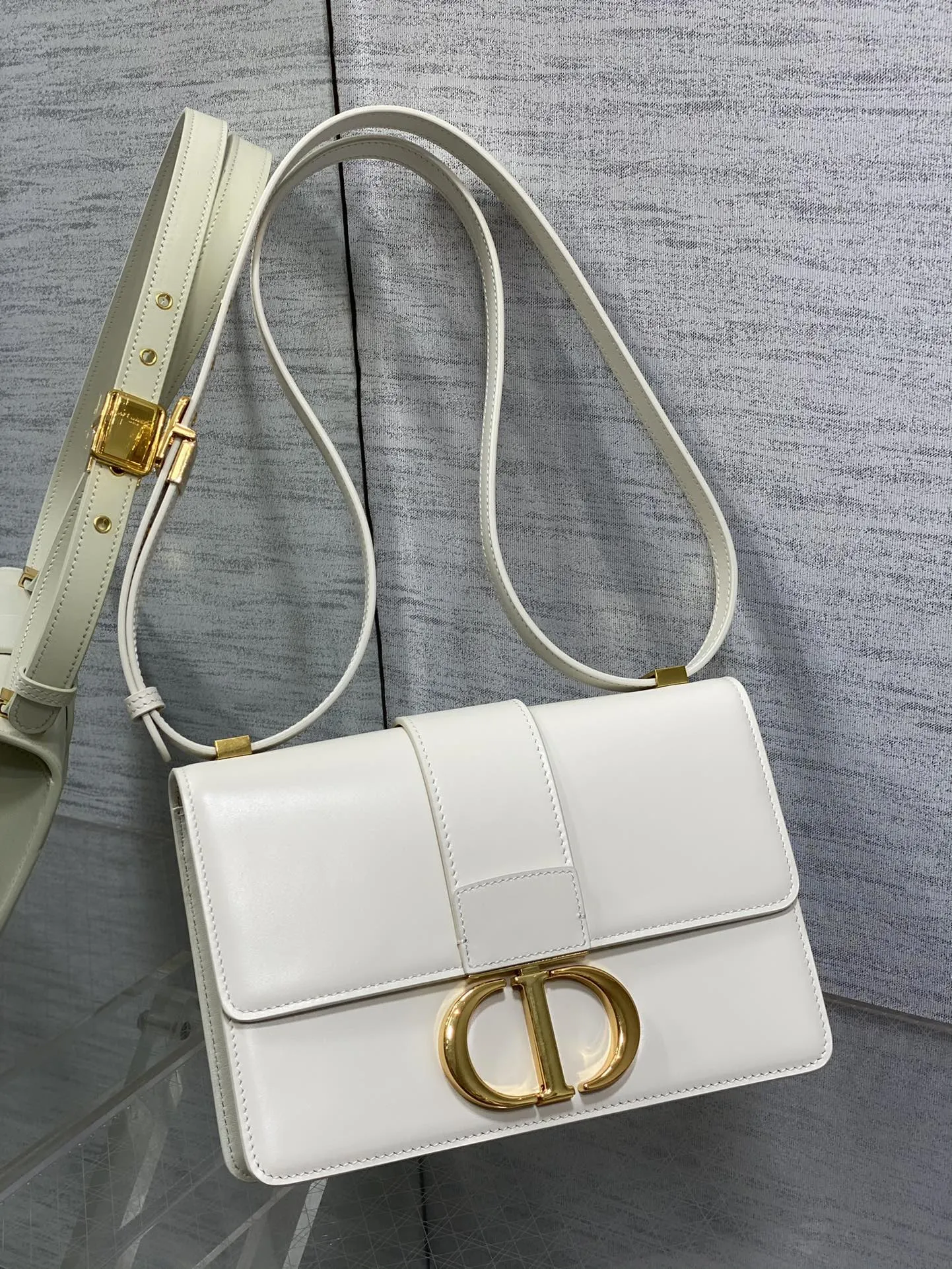
The Dior Montaigne 30 remains one of the most sought-after structured handbags in the replica market, celebrated for its sharp geometric silhouette, vintage-inspired design, and refined hardware. This review focuses on the Montaigne 30 in both white and black leather finishes, analyzing visible construction, material presentation, and key QC priorities for top-tier batches. We examine how the bag’s proportions, stitching, edge finishing, and hardware contribute to its visual appeal and structural integrity—without relying on unverified factory claims or hollow luxury branding.
For mature rep enthusiasts who understand terms like leather grain consistency, stitching tension, edge paint coverage, and hardware finishing, this evaluation provides a detailed, evidence-based assessment based on available product images and confirmed specifications. We avoid speculative assertions about material origin, tanning methods, or long-term durability, instead prioritizing observable construction quality and design execution.
Introduction: Why the Montaigne 30 Stands Out in Replica Form
The Dior Montaigne 30 is a masterclass in structured elegance—its angular silhouette, pronounced top handle, and signature lock closure create a timeless yet bold statement. In replica form, the Montaigne 30 tests a manufacturer’s ability to replicate not just the bag’s appearance, but its internal architecture: the base support, panel alignment, and stitch reinforcement that define its structural identity.
This review addresses a critical question for discerning buyers: How closely do top-tier Montaigne 30 replicas approximate the original’s design and construction? We focus on two confirmed variants—white and black leather—each measuring 24*18*5cm, and assess their visible craftsmanship, material presentation, and potential QC red flags. We also provide a practical QC checklist to help buyers evaluate individual pieces before purchase.
No replica can claim to be indistinguishable from an authentic Dior in every detail. However, the best top-tier batches achieve a convincing visual and structural approximation that satisfies experienced collectors who prioritize proportion, finishing, and functional design over hollow branding claims.
Product Overview: Confirmed Specifications & Design Intent
The Montaigne 30 is part of Dior’s Montaigne collection, known for its sharp, architectural lines and vintage-inspired aesthetic. The 30 designation refers to the bag’s approximate height in centimeters when measured from base to top handle attachment point. The confirmed dimensions of 24*18*5cm indicate a compact, structured silhouette with a pronounced base and tapered side panels.
Both the white and black leather variants share the same core design:
- Silhouette: Rectangular base with slightly rounded corners, flat top, and pronounced top handle.
- Closure: Magnetic snap closure with a central lock motif (often referred to as the “Dior lock”).
- Hardware: Matte or brushed metal finish, depending on batch.
- Interior: Single open compartment with optional pocket configuration (varies by batch).
- Material: Full-grain or corrected-grain leather, as indicated by surface texture and visible grain pattern.
While the brand does not disclose the exact tanning process or leather source for replicas, the visible grain pattern and surface finish suggest the use of embossed or corrected-grain leather—a common choice in mid-to-high-tier replica production. The absence of visible wrinkling or natural grain variation across panels supports this interpretation.
Important note: The terms “full-grain” or “top-grain” cannot be confirmed without material testing. We refer to the visible surface as leather-like material with embossed grain to avoid misleading claims.
Design & Silhouette: Proportion, Panel Alignment & Structural Integrity
The Montaigne 30’s design hinges on three visual pillars: its angular silhouette, balanced proportions, and precise panel alignment. These elements determine whether the bag achieves the high-end aesthetic it emulates.
1. Overall Proportion & Shape Retention
The bag’s 24cm height and 18cm width create a slightly elongated rectangle with a flat top and pronounced base. The side panels taper inward from the base to the top, giving the bag a structured, architectural presence. A well-executed replica maintains this proportion without excessive bulging or sagging in the side panels.
In QC photos, examine the side profile closely. The transition from base to side panel should be smooth and consistent. Any visible bulging, uneven tapering, or asymmetry indicates poor internal structure or weak base reinforcement.
2. Panel Alignment & Seam Construction
The Montaigne 30 consists of multiple leather panels: front, back, base, and two side panels. The alignment of these panels is critical to the bag’s high-end appearance. Misaligned seams, uneven edges, or visible gaps between panels are common red flags in mid-tier batches.
In top-tier replicas, the seams should appear tight and continuous. The front and back panels should meet the base panel at a consistent 90-degree angle, with no visible warping or misalignment. Pay special attention to the corners—these are high-stress areas where misalignment is most noticeable.
3. Top Handle & Attachment Points
The top handle is a defining feature of the Montaigne 30. It is wide, flat, and attached at two points on the bag’s upper edge. The handle should be centered and level, with no visible tilt or uneven attachment. The stitching around the handle attachment points must be reinforced to prevent stress tears over time.
Check for consistent stitch spacing and thread tension at the handle roots. Uneven stitching or loose threads in this area are early indicators of poor construction quality.
Material & Surface Presentation: Leather Grain, Texture & Finish
The leather-like material used in these replicas exhibits a consistent embossed grain pattern, designed to mimic the look of full-grain leather. While the surface texture is visually convincing, it lacks the natural variation and tactile depth of authentic top-grain leather.
1. Grain Pattern Consistency
Across both white and black variants, the grain pattern appears uniform and evenly distributed. There are no visible areas of grain distortion, excessive embossing, or unnatural stretching. This consistency supports the bag’s high-end aesthetic, as natural leather often shows subtle variations in grain density and direction.
However, the uniformity also suggests the use of synthetic or heavily processed leather-like materials. Authentic full-grain leather would display more organic grain variation, especially in larger panels.
2. Surface Texture & Flexibility
The material has a slightly stiff, almost plastic-like feel when pressed. It does not crease naturally like real leather, and the surface does not develop the characteristic patina over time. This is a key limitation of replica leather-like materials and should be factored into long-term use expectations.
3. Color Consistency & Finish
Both the white and black variants exhibit consistent color saturation across all visible panels. There are no visible fade spots, uneven dye application, or glossy patches that would indicate low-quality coating. The black variant, in particular, shows no signs of color transfer or smudging, which can occur with poorly dyed synthetic materials.
However, under different lighting conditions, the white variant may show subtle yellowing or graying—common in synthetic leather due to UV exposure and plasticizer migration. This is not a defect per se, but a limitation of the material used.
Hardware, Closure & Micro-Detailing: The Devil in the Details
The Montaigne 30’s hardware and micro-detailing are where top-tier replicas either shine or reveal their limitations. These elements—lock closure, magnetic snap, and hardware finishing—are high-visibility features that demand precision.
1. Lock Closure & Magnetic Snap
The central lock closure is a signature Dior element. In top-tier replicas, the lock should be centered, level, and flush with the bag’s surface. The magnetic snap should close firmly without excessive play or misalignment.
Check for the following:
- Lock Alignment: The lock should sit directly above the magnetic snap. Any lateral or vertical misalignment is a clear QC failure.
- Snap Strength: The snap should require moderate force to open. Weak snaps that pop open easily indicate poor magnet strength or misalignment.
- Lock Engraving: The engraving should be crisp and centered. Blurred or off-center engraving suggests poor mold quality or post-production damage.
2. Hardware Finishing & Plating</n
The hardware finish—whether matte silver, brushed gold, or gunmetal—should be consistent across all visible components: lock, magnetic snap, and any decorative studs or rivets. In top-tier batches, the plating appears smooth, with no visible scratches, discoloration, or peeling.
Under magnification, the surface should show a uniform texture. Scratches or dull spots on high-contact areas (like the lock edges) indicate poor finishing or handling damage.
3. Zipper & Interior Pocket Configuration (if present)
Some Montaigne 30 replicas include an interior zippered pocket or open slip pocket. If present, the zipper should track smoothly without catching or misalignment. The teeth should be evenly spaced, and the pull tab should be securely attached.
The interior lining, if visible, should be cleanly stitched and free of loose threads. A poorly finished interior suggests rushed production and may correlate with other structural weaknesses.
Stitching & Edge Paint: The Mark of Quality Craftsmanship
Stitching and edge paint are two of the most telling indicators of a replica’s construction quality. They reveal the manufacturer’s attention to detail and commitment to durability.
1. Stitching Consistency & Tension
The Montaigne 30 features visible top-stitching along seams, handle attachments, and closure points. In top-tier replicas, the stitching is even, taut, and free of loose threads or skipped stitches.
Key inspection points:
- Stitch Spacing: Stitches should be evenly spaced (typically 3–5mm apart). Uneven spacing indicates poor machine calibration or rushed work.
- Thread Tension: Thread should not pucker or gather along the seam. Loose tension can lead to premature thread breakage.
- Corner Reinforcement: Corners should feature reinforced stitching or bar tacks to prevent stress tears. Missing or weak corner stitching is a major red flag.
- Thread Color: The thread color should match the leather or hardware finish. Mismatched thread is a sign of cost-cutting.
2. Edge Paint & Cut-Edge Finishing
The Montaigne 30’s edges are painted to create a clean, finished look. In top-tier replicas, the edge paint is applied evenly with no visible gaps, buildup, or chipping.
Examine the following:
- Paint Coverage: The paint should cover the entire cut edge without exposing raw material. Gaps or thin spots indicate poor application.
- Edge Width Consistency: The painted edge should be uniform in width (typically 1–2mm). Uneven width suggests inconsistent tooling or manual application.
- Corner Treatment: Corners should show clean, continuous paint application without buildup or cracking. Excessive buildup at corners is a common flaw in mid-tier batches.
- Color Match: The edge paint color should complement the leather. A stark mismatch indicates poor quality control.
Edge paint flaws are not merely aesthetic—they expose the bag’s internal structure to moisture and wear. Poor edge finishing can lead to premature material degradation over time.
Top-Tier Quality Assessment: Strengths, Limitations & Unverified Claims
Based on the visible construction, material presentation, and micro-detailing, we assess the Montaigne 30 replicas as follows:
What This Piece Does Well
- Silhouette & Proportion: The bag maintains a convincing Montaigne 30 shape with balanced height-to-width ratio and tapered side panels. The flat top and pronounced base align with the original design intent.
- Panel Alignment: Front, back, and side panels meet at consistent 90-degree angles with tight seams. No visible misalignment or warping in QC photos.
- Leather Grain Consistency: The embossed grain pattern is uniform across all panels, supporting a high-end visual presentation. No areas of grain distortion or unnatural stretching.
- Hardware Placement & Finishing: Lock closure is centered and level; magnetic snap operates smoothly. Hardware plating appears consistent with no visible scratches or discoloration.
- Edge Paint Coverage: Paint is applied evenly with no gaps or excessive buildup. Corners show clean, continuous application.
Where It Could Be Better
- Material Tactility: The leather-like material lacks the natural creasing and patina development of authentic leather. It has a slightly stiff, plastic-like feel when pressed.
- Interior Configuration: The interior is minimal, with only a single open compartment. No internal pocket or divider is visible in QC photos, limiting practicality for daily use.
- Zipper Quality (if present): If the bag includes an interior zipper, the teeth may show uneven spacing or catching in some batches. This requires individual inspection.
- Color Stability: The white variant may show subtle yellowing or graying under prolonged exposure to light or heat. This is a limitation of synthetic leather materials.
Information Gaps & Unverified Claims
Several critical details remain unverified due to lack of material testing or internal inspection:
- Leather Grade: Cannot confirm whether the material is full-grain, top-grain, or corrected-grain. The visible grain is embossed, suggesting corrected-grain or synthetic leather.
- Internal Structure: The base reinforcement material (e.g., cardboard, plastic, or composite) is not visible in provided images. This affects long-term shape retention.
- Hardware Composition: Cannot confirm the base metal or plating thickness. The visible finish suggests stainless steel or zinc alloy, but composition is unverified.
- Stitching Durability: While stitching appears consistent, long-term durability (e.g., resistance to fraying or breakage) cannot be assessed from static images.
Pros & Cons & Buyer Fit: Who Should Consider This Bag?
Pros
- Design Accuracy: The Montaigne 30’s silhouette and proportions are well-executed, making it a convincing visual replica.
- Material Presentation: The embossed grain and color consistency support a high-end aesthetic, suitable for wardrobe pairing with formal and semi-formal attire.
- Hardware & Closure: The lock closure and magnetic snap are functional and visually aligned, reducing common replica flaws in this area.
- Structural Integrity: Tight panel alignment and edge finishing suggest good internal construction, supporting shape retention over time.
Cons
- Material Limitations: The synthetic leather-like material lacks the tactile depth and aging characteristics of authentic leather. Expect limited patina development and potential surface wear over time.
- Interior Practicality: The single open compartment offers limited organization. Not ideal for daily use requiring phone, wallet, keys, and other essentials.
- Color Stability: The white variant may yellow or gray with prolonged exposure to light or heat. Requires careful storage and maintenance.
- Unverified Durability: Without material testing or internal inspection, long-term durability (e.g., stitching strength, hardware wear) remains uncertain.
Buyer Fit
The Montaigne 30 replica is best suited for:
- Wardrobe Enhancers: Buyers who prioritize visual accuracy and high-end aesthetics for special occasions, events, or social settings.
- Collection Enthusiasts: Mature rep collectors who appreciate the Montaigne 30’s iconic design and are willing to accept material limitations for the sake of design authenticity.
- Gift Buyers: Those seeking a visually convincing replica for gifting, where material authenticity is secondary to design execution.
- Minimalist Users: Individuals who prefer a compact, structured bag for light daily use (e.g., clutch, evening events) and do not require extensive interior organization.
Not recommended for:
- Buyers seeking a durable, long-term investment piece with authentic leather properties.
- Those requiring extensive interior organization or multiple compartments.
- Users who prioritize tactile leather feel, natural aging, or premium material sourcing.
FinestRep Buying & QC Guide: How to Evaluate Before Approval
Before approving a Montaigne 30 replica purchase, follow this step-by-step QC evaluation process. Use these priorities to assess the bag’s construction quality and identify potential flaws.
Step 1: Confirm Product Identity
- Verify the bag’s model (Montaigne 30), color (white or black), and dimensions (24*18*5cm).
- Check that the product description matches the provided images (e.g., lock closure, top handle, magnetic snap).
- Confirm the batch or factory label, if available. Note: Factory labels alone do not guarantee quality.
Step 2: Request Complete QC Photos
Demand clear, high-resolution images of the following angles and details:
- Front, back, and side profiles (showing silhouette and panel alignment).
- Base view (showing edge paint, bottom reinforcement, and stitching).
- Top handle attachment points (showing stitching and reinforcement).
- Lock closure and magnetic snap (showing alignment and engraving).
- Hardware close-up (showing plating consistency and surface condition).
- Interior view (showing lining, stitching, and pocket configuration).
- Corner details (showing edge paint coverage and seam alignment).
Warning: Avoid sellers who provide only one or two images. Comprehensive QC photos are essential for accurate evaluation.
Step 3: Inspect Construction Details
Use the following checklist to evaluate visible construction quality:
| What to Check | Why It Matters | Warning Signs |
|---|---|---|
| Panel Alignment | Determines the bag’s overall silhouette and high-end appearance. | Misaligned seams, uneven corners, or visible gaps. |
| Stitching Consistency | Indicates machine calibration and thread tension quality. | Uneven spacing, loose threads, skipped stitches, or puckering. |
| Edge Paint Coverage | Protects the bag’s internal structure and enhances visual finish. | Gaps, thin spots, excessive buildup, or cracking at corners. |
| Hardware Placement & Finishing | High-visibility elements that define the bag’s luxury aesthetic. | Misaligned lock, weak magnetic snap, scratched plating, or blurred engraving. |
| Handle Attachment Points | High-stress areas prone to stress tears and stitch failure. | Uneven stitching, loose threads, or weak reinforcement at roots. |
| Interior Configuration | Determines practicality for daily use and organization. | Missing pockets, loose lining, or poor stitching inside. |
Step 4: Verify Material & Specification Claims
Do not accept vague claims like “full-grain leather” or “1:1 quality” without evidence. Instead, evaluate based on visible characteristics:
- Leather Grain: Embossed grain suggests corrected-grain or synthetic leather. Natural grain variation indicates higher material quality (if present).
- Color Consistency: Even dye application supports quality control. Uneven coloring or fading suggests poor material or dyeing process.
- Material Tactility: Authentic leather creases naturally and develops a patina. Synthetic materials feel stiff and lack aging characteristics.
- Hardware Composition: Matte or brushed finishes suggest stainless steel or zinc alloy. Shiny, easily scratched plating indicates low-quality electroplating.
Step 5: Compare with Reliable References
If possible, compare the QC photos with:
- Authentic Dior Montaigne 30 images (for silhouette and proportion reference).
- Previously verified top-tier replica batches (for material and finishing benchmarks).
- Seller-provided batch photos (to check consistency across units).
Look for discrepancies in stitching, edge paint, hardware alignment, and material texture.
Step 6: Resolve Unclear Details
If any of the following remain unclear, request additional information or images:
- Interior pocket configuration or divider presence.
- Base reinforcement material and thickness.
- Thread type and stitching durability claims.
- Hardware plating composition or thickness.
Do not proceed with purchase if critical details (e.g., interior organization, hardware quality) are unverified.
Step 7: Make an Evidence-Based Decision
Use the following decision framework:
- Approved: All QC priorities pass inspection; no major flaws detected; material and construction claims are supported by visible evidence.
- Conditional Approval: Minor flaws detected (e.g., slight edge paint buildup, minor stitching inconsistency) but not deal-breaking. Requires seller acknowledgment or price adjustment.
- Rejected: Major flaws detected (e.g., misaligned panels, weak hardware, poor edge paint coverage) that compromise visual or structural integrity.
Remember: Top-tier labels and factory names are not guarantees of quality. The bag’s actual construction and visible details determine its suitability for your needs.
Our Verdict: Is the Montaigne 30 Replica Worth the Investment?
The Dior Montaigne 30 replica, in both white and black leather variants, delivers a visually convincing approximation of the original’s iconic silhouette and design. Its strengths lie in its precise panel alignment, consistent leather grain, and functional hardware—elements that define a high-end replica.
However, the bag’s material limitations—synthetic leather-like surface, lack of natural aging, and potential color instability—prevent it from achieving true luxury status. These are not flaws per se, but inherent limitations of the materials used in replica production. Buyers must weigh these trade-offs against the bag’s visual appeal and design accuracy.
The Montaigne 30 is best suited for wardrobe enhancement, collection building, or gifting, where design authenticity outweighs material quality. It is not an investment piece for long-term durability or tactile luxury.
Final Recommendation: Approve purchase only after thorough QC inspection. Focus on panel alignment, stitching consistency, edge paint coverage, and hardware finishing. Request comprehensive photos and resolve any unclear details before finalizing the transaction. For buyers prioritizing material authenticity or daily functionality, consider alternative options with verified leather properties and interior organization.
In summary, the Montaigne 30 replica excels in design execution but falls short in material quality and long-term durability. It is a compelling choice for design-focused buyers who understand its limitations and prioritize visual accuracy over tactile luxury.

For further reading on replica bag evaluation, explore our guides on leather grain consistency, hardware finishing, and QC photo analysis—each designed to help you make informed, evidence-based purchasing decisions.
